
Interview: Solo Ntsizwa and Buhlebendalo Discuss INQAWE
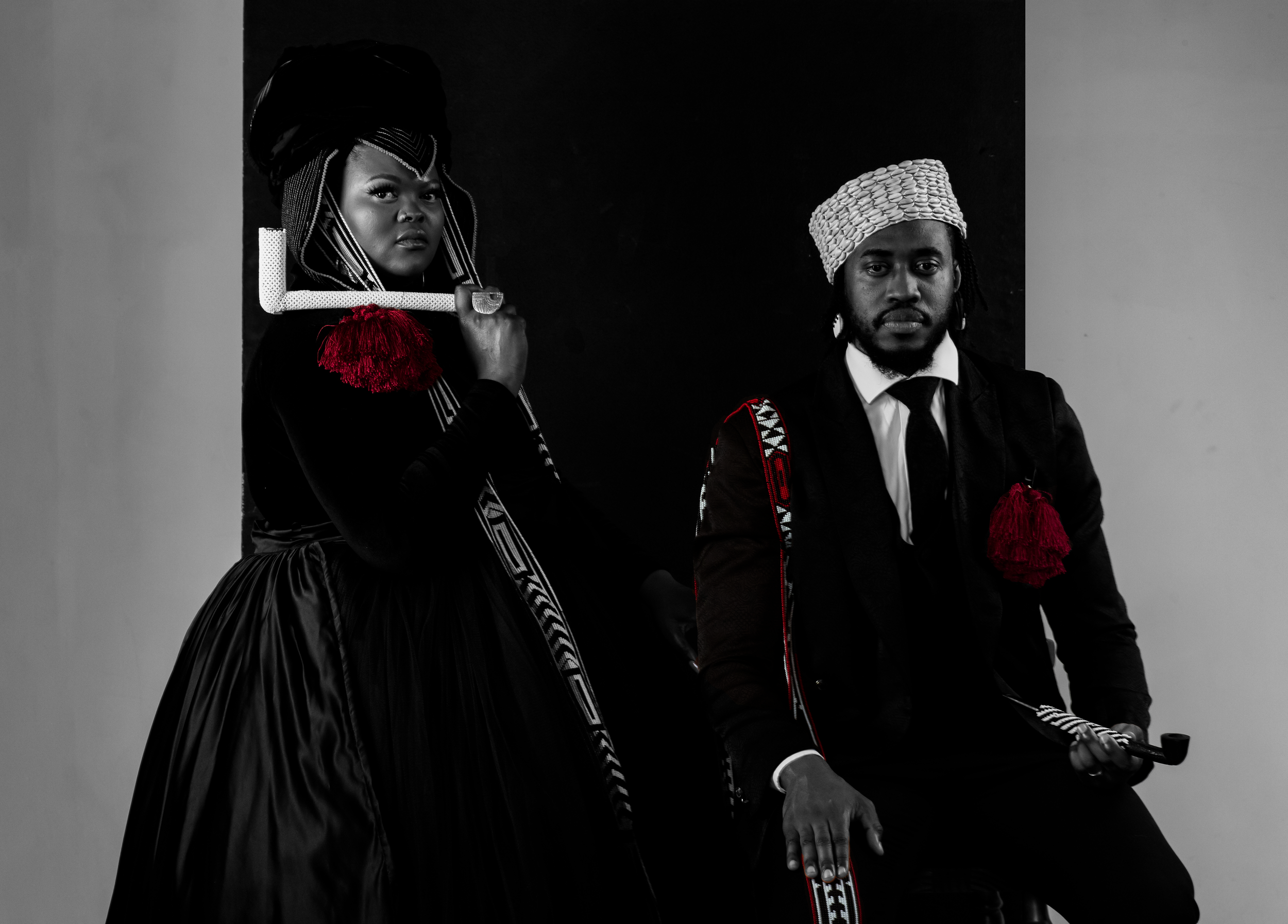
Solo Ntsizwa and Buhlebendalo Discuss Their Powerful Collaborative Album, INQAWE
Award-winning artists Solo Ntsizwa and Buhlebendalo have joined forces on the highly anticipated collaborative project, INQAWE. This album, which merges the lyrical precision of hip-hop with the spiritual resonance of African traditional music, has swiftly positioned itself as one of the year's most significant cultural statements.
We interviewed the inspired artists to discuss the genesis of this powerful union, detailing the inspiration and the compelling creative chemistry that fueled the creation of INQAWE.
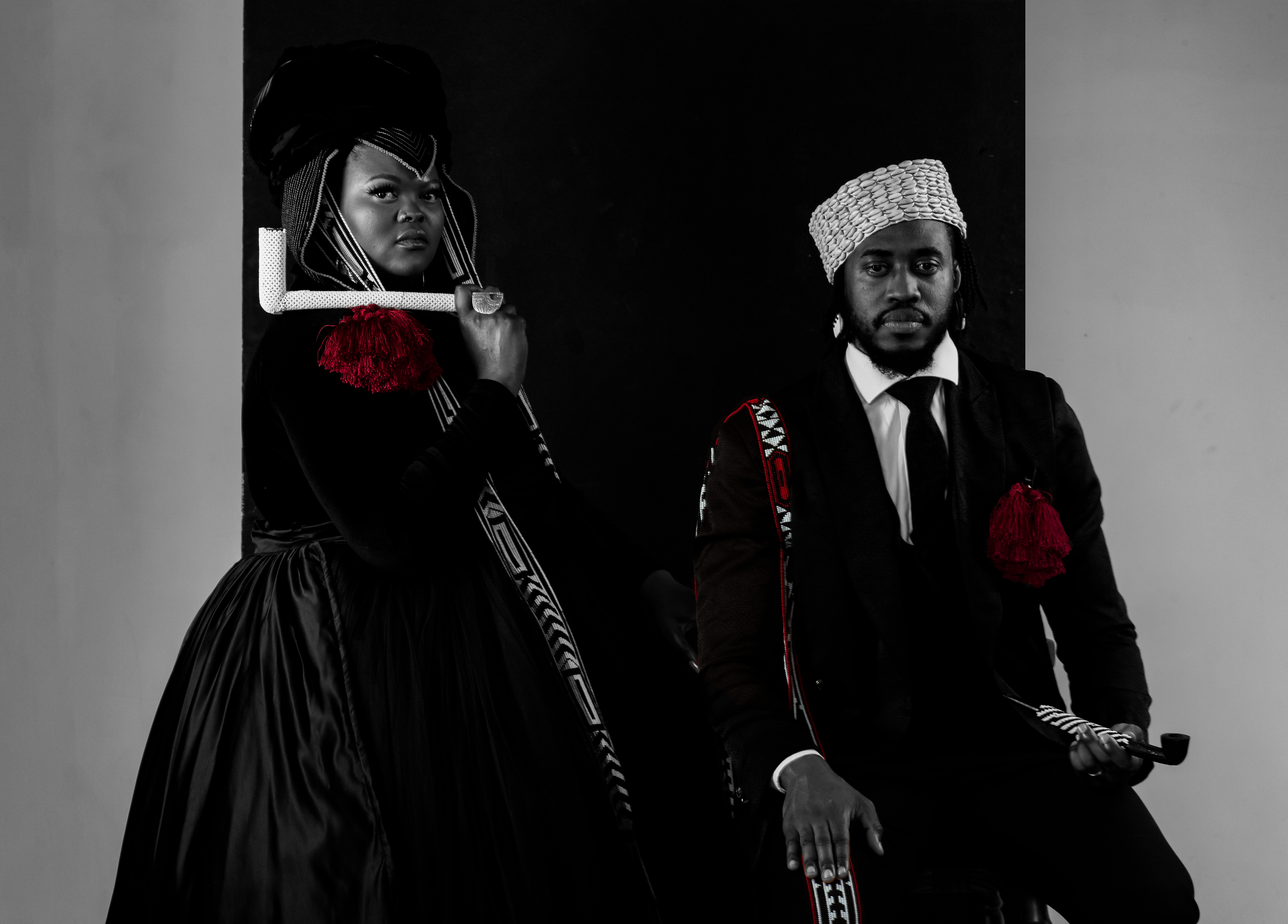
Q: INQAWE carries deep cultural meaning as both an artefact and a metaphor. What inspired you to use it as the project title and central theme of this project?
A: Buhlebendalo and I had to have a number of conversations to ready ourselves for this project. These conversations began to feel like conversations between elders, who were considering their community and their responsibilities to said community. The imagery of elders in conversation presented itself to us and "INQAWE" became this motif that kept occurring. It started as a song concept, but we felt that it perfectly highlighted what this album is.
Q: You announced Inqawe on Heritage Day in South Africa, and a day after Inzalo ye Langa. Why was this timing important for you to do so?
A: Mainly because of the timing of two very significant moments on our calendar. Inzalo ye Langa really puts an emphasis on the sun as a source of life but also signifies an ancient wisdom. That coupled with South Africa's Heritage Day felt like the ingredients in this project.
Q: What inspired you to collaborate with each other on this album and how did your creative chemistry evolve throughout the process?
A: The collaboration started as a DM on Instagram. Buhlebendalo reached out to me during the rollout of my 4th studio album, "The God Anomaly". She was in the process of wrapping up her album, "Hele". We were fans of each other's work. At some point, I responded to a Story she posted on Instagram, stating that if she needed a feature, she should let me know. Her response to me was that she would prefer a joint project. She asked me to assist her in praying about it and ukuyiphahlela. The chemistry really showed itself on "Ulele Ubaba". As painful as that song was to create, I could not deny that it showed that we could definitely execute together. The more sessions we had in studio, the more evident that became. I think we were able to trust each others' processes very quickly.
Q: How long did the album conceptualisation and recording process take?
A: I'd say about 6 months.
Q: Who are the other creative collaborators on the project from production to creative direction, etc.?
A: We worked with some amazing artists on this album. Modika was my right hand man at the beginning of this project. He is on production on a number of songs. I trust his ear and opinion. Muzi jumped on after he came to visit me. I played him some ideas and he was happy to lock in with us. Botshelo Mondi, also known as Soft Pantsula was stationed as our creative director. They really helped shape the audio into the visuals you've seen in our roll out. Rici Martins mixed the album and also did the Dolby ATMOS masters. We worked with Des Grey for the stereo master. Jean-Michel Wickli and Tiffany Mentoor, our production managers, really assisted in making sure that we executed everything we set out to do. The art of the follow-through.
Q: The album fuses hip-hop and African traditional music in a way that feels both organic and intentional. How did you approach blending these two worlds sonically?
A: It wasn't necessarily a decision to fuse sounds. We fused worlds. By virtue of me being a rapper, there were always going to be traces of that. The sonics were more determined by the themes of the songs. Some records needed us to feel spirit. Other records needed aggression. Others needed you to feel the pain of loss.
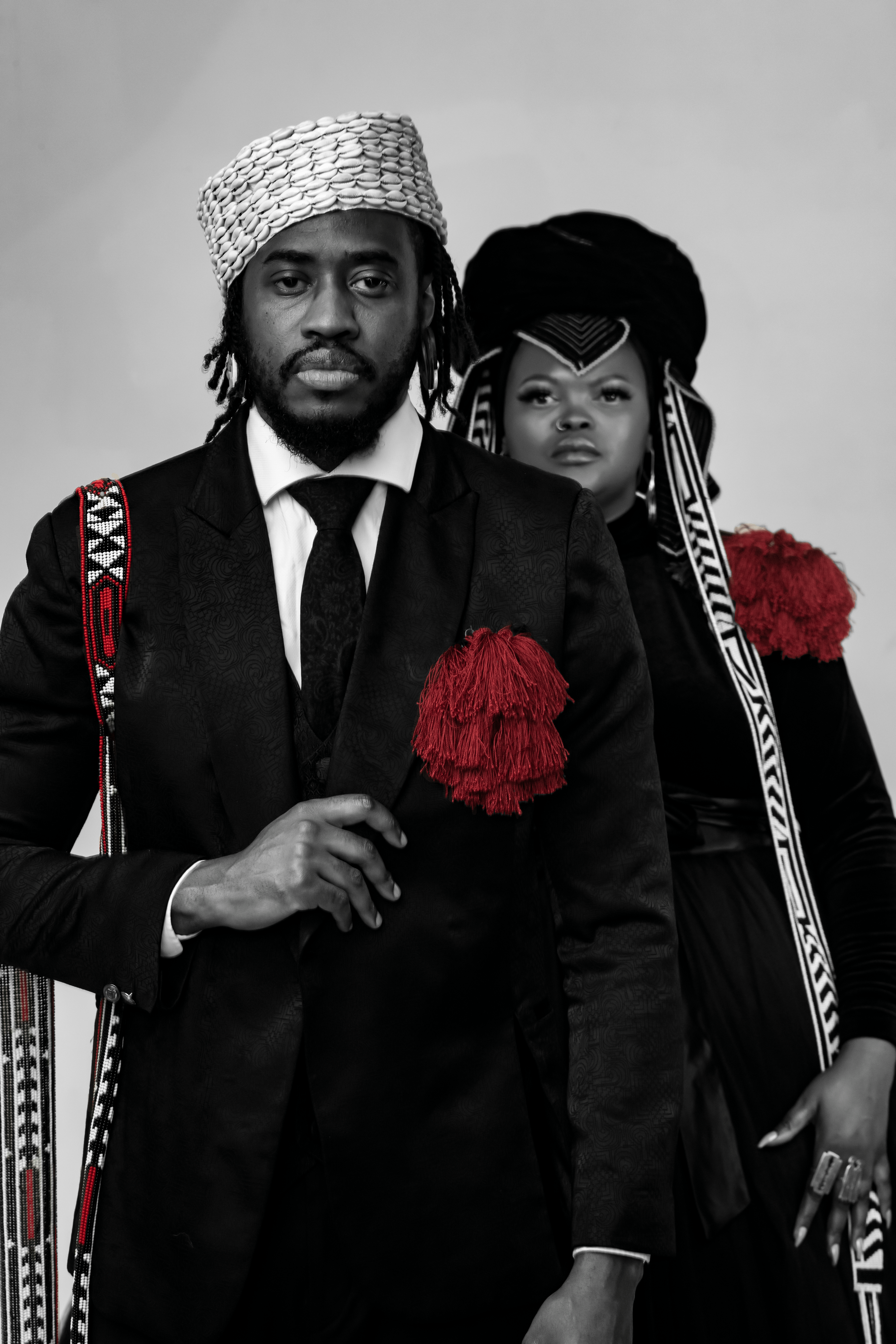
Q: Please can you share the overarching lyrical themes explored on the album and what inspired you to explore these specific themes?
A: Isikhwama, as a theme, speaks on the gift that is passed on. One inherits the gift by accepting Isikhwama and the responsibilities it comes with. We explore the relationship between the blessings of being chosen as well as the burdens of being chosen.
Q: You touched on uLele uBaba, Isiduli and Kakhulu during your live discussion. Please may you touch on the other tracks featured on the album as well.
A: Isiduli zones in on the idea that our ancestors are many. "Ubuncane be'ntuthwane, sibaningi njenge'ntuthwane" really emphasizes that. It highlights the fact that we have generations upon generations fighting for us and on our behalf. We also highlight Isiduli as a place of strong meditation. These are some of the most powerful places of prayer. INQAWE, focuses on the idea of community. Elders asking important and challenging questions and challenging ideas. All whilst smoking together peacefully and enjoying each others' company. Kakhulu poses the question of what could possibly happen if the signs of colonization were to resurface today. What has our past taught us? Ulele Ubaba is a very personal record that speaks to the loss of my father. If "Ulele Ubaba" is the morning of the funeral, "Ukhamba" is the afternoon when the work has been done and everyone is a little more relaxed while being very grateful for their community taking care of them in a trying time.
Q: Which track do you each feel most personally connected to, and why?
A: Solo Ntsizwa: INQAWE is currently my favourite. Maybe because it's the title track and therefore is almost like the centrepiece.
A: Buhlebendalo: I want to say All of them lol. But INQAWE is thought provoking and has ability to decolonize the black mind.
Q: You have both honoured your respective ancestral callings and initiated. What influence have your respective ancestral gifts and journeys had in the making of this project?
A: Solo Ntsizwa: One thing I remember about my journey is that I was not alone. I also know that that makes me part of the privileged few. This journey can be tough as well as lonely if you do not have the support of family. As a result, a big part of this album for me, is for those people who do not have others to rely on at this time. I want this album to feel like some level of support. FUBU. For Us. By Us.
A: Buhlebendalo: This project is also shining light to the beauty and pride of being a gifted child. Being able to be more than just iSangoma but also a reflection of what it means to be Black, the ability to embrace all the gifts that come with ancestry.
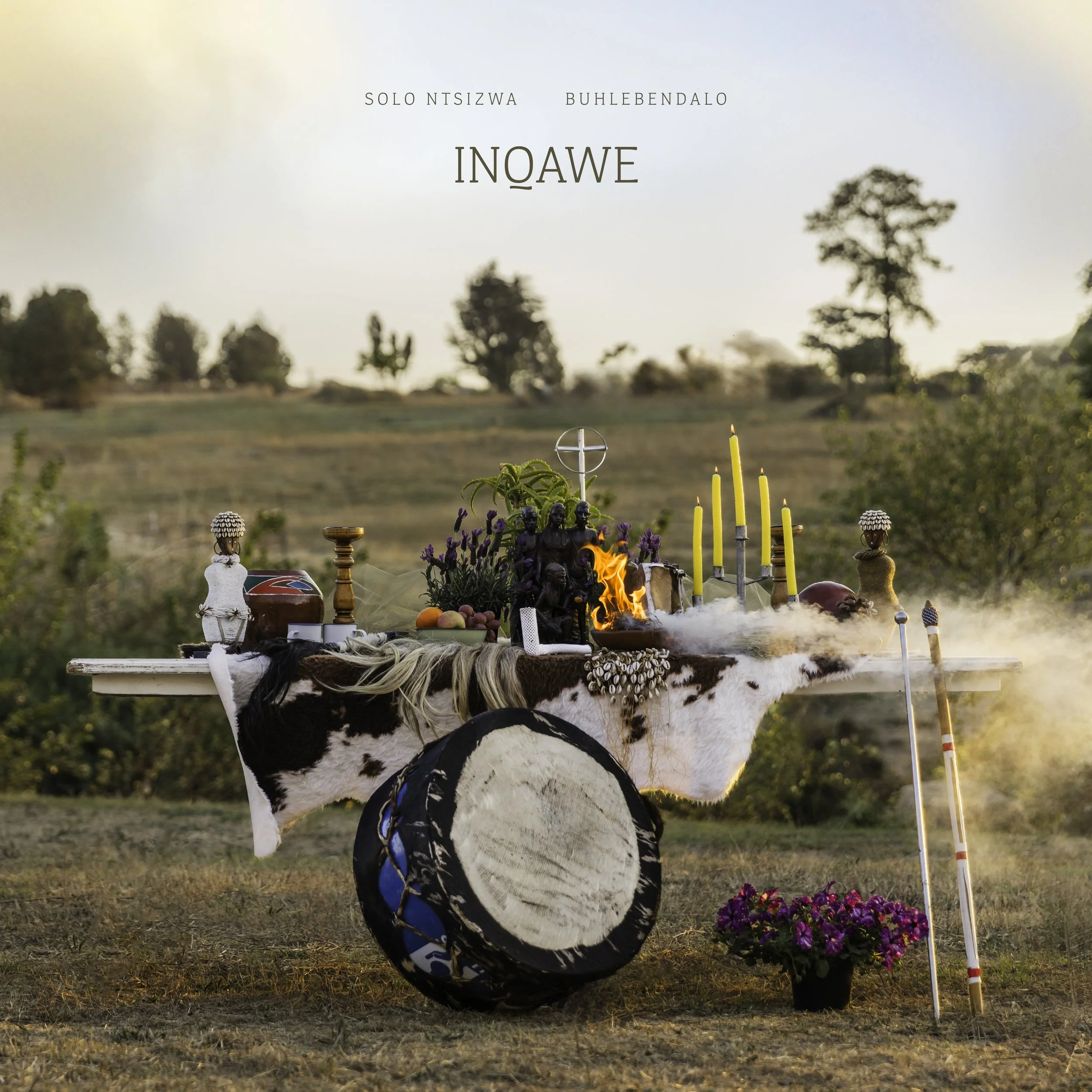
Q: The depth of symbolism on the album cover is immense. Please share the creative direction behind the cover and what the cover art represents to each of you?
A: The album cover showcases an offering, with the table serving as umsamo with paraphernalia that pleases abantu abadala.
Q: Mkhulu, there has been a rise in spiritual and ancestral consciousness in contemporary South African music which is slowly beginning to permeate the South African hip hop fraternity too. What do you hope Inqawe adds to that growing musical dialogue?
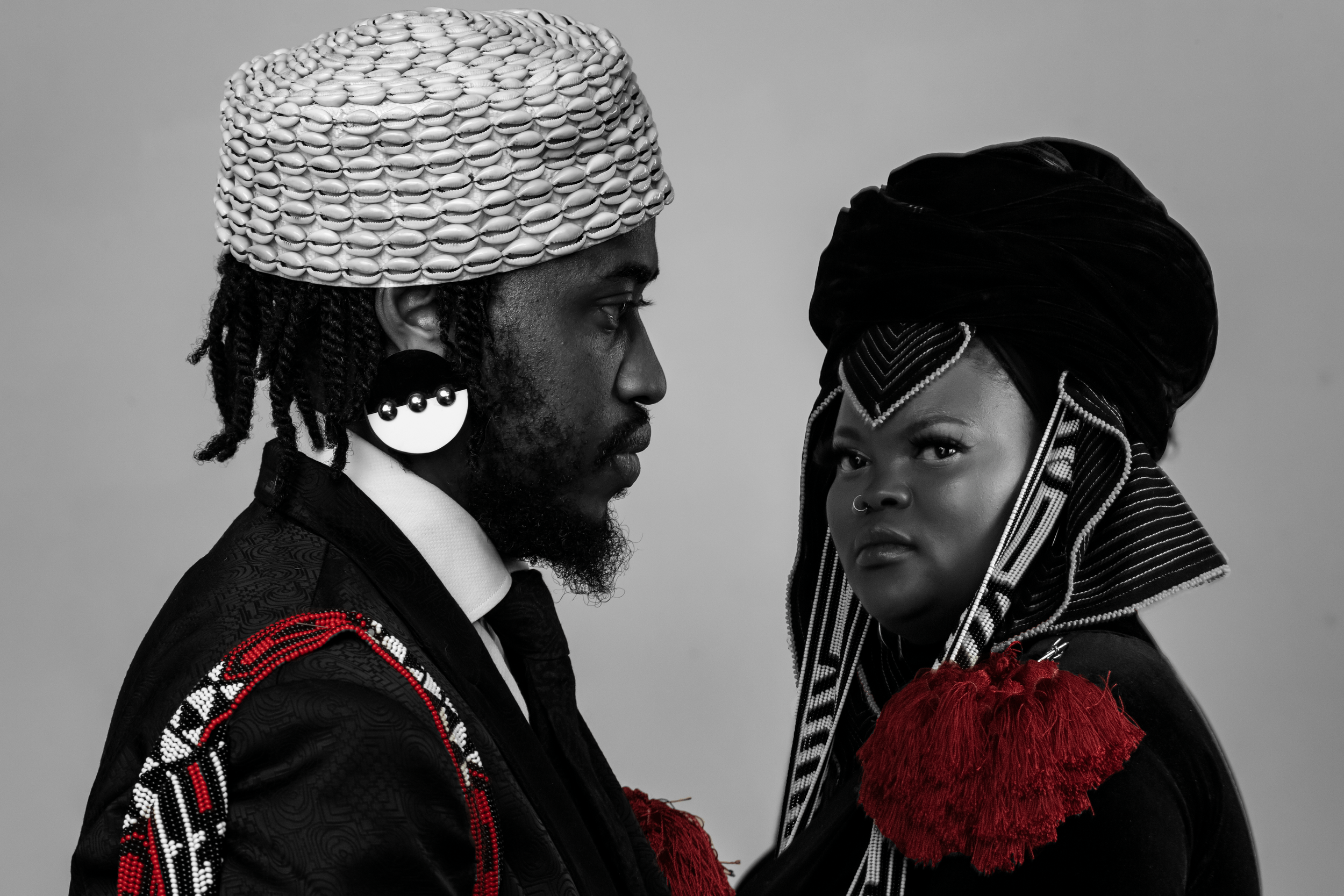
A: Solo Ntsizwa: I am just playing my part. I feel a level of responsibility and I am just heeding the call. It is a beautiful thing if many of us are.
Q: Gogo, as a prolific singer who has had an incredible sonic impact on the South African musical landscape, you’ve ventured into rapping on this album. What inspired the decision to rap on this project, what has the experience been like and is it something you will continue on other projects?
A: Buhlebendalo: I've had a few attempts at rapping before, but on this project I was intentional about honouring uMkhulu and what he stands for. I believe there are multiple women that I come with, I wanted the rapper to also take centre stage. I don't know if I'll be able to rap like i did on this project, unless I spend more time with Solo.
Q: Gogo, you described the recording of this project as “intwaso all over again”. Please could you expand on that.
A: Buhlebendalo: Intwaso is layered. It feels like rebirth. Your old self needs to die to give birth to your new self. I didn't know the woman I met when I started this project. I had to reintroduce myself to myself, speak a language that will allow me to tap into a different version of me. A version that looks familiar yet new. I had to surrender to the music-again, not the way I've learnt it before but as a clean canvas.
Q: What inspired the concept behind the Kakhulu music visualizer?
A: "Kakhulu" has a visualizer. We released no singles before the release of the album. We decided to give each verse of the song a moment by releasing a part one and part two of the visualizer.
Q: There are references in the Kakhulu music video which are inherent in certain ancestral practices. What inspired the incorporation of those visual references?
A: The visual references in the visualizer for "Kakhulu" are there to signify that the artists who are speaking through the music, are in fact, initiates. We know what we speak of and take pride in it.
Q: There is an extremely limited societal understanding of how iDlozi functions and operates. How would you describe your respective experiences of iDlozi in respect to their ability to influence and lead artistry and creativity?
A: I personally feel as Abantu-we carry a big sense of identity that is embedded in artistic expression. WE are art. From our skin tones to how we chant and dance to the rhythm of drums. The coordination between the clapping of hands and the stomping of feet resembles a huge inheritance of UBuntu bethu. As abantwana be dlozi, we are custodians of preserving that and carrying forward.
Q: What do you hope those listening to the album experience or take away from it?
A: I hope that this can ignite a sense of pride in who we are. I believe that it would serve us well to lean into our identity rather than being docile.
Q: What kind of musical or cultural legacy do you hope Inqawe leaves behind?
A: Buhlebendalo and I often speak about needing to be ready. We're just not sure about what that is. We can feel the power that lies in this project. As far as cultural legacy goes, only time will tell. All we can do is continue to be vessels. That has gotten us this far.
Album Credits:
Executive Producers: @solontsizwa, @buhlebendalomda
Creative Director: @soft_pantsula
Photography: @sevvenofficial
Production Managers: @halfnhalfmusic ; @tiffany.mentoor
Typography: @pleasesaythe_by for @normvl_
Album produced by: Zothile Langa, @_phonikz @mvziou , @johnlundun
Album mixing and mastering: @sevvenofficial for @methodxmadness.studio